
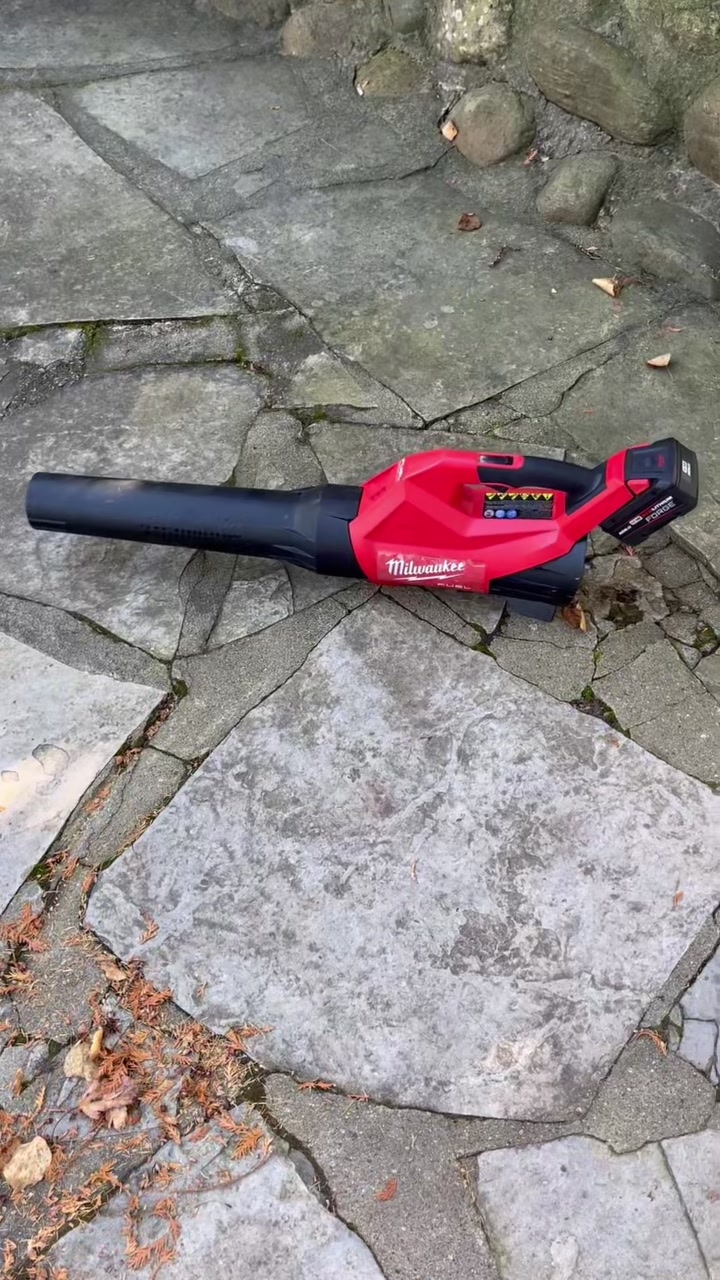
Why I'm qualified to judge this blower
Sixteen-plus years in procurement is mostly the discipline of total cost: not what a tool costs to buy, but what it costs to own, feed, and actually use. Blowers are a perfect case. The corded one in the garage was "cheap" for years while quietly taxing every single cleanup with setup, snagging, and a dirty wrap-up at the end. This Milwaukee replaced it. Here's the honest breakdown — including the one limitation that decides whether it's the right buy for you, because it's a battery story, not a blower story.
Who this is for
Homeowners and cottage owners with patios, decks, driveways, and a normal fall's worth of leaves — especially anyone already running Milwaukee M18 tools, and anyone whose current cleanup routine involves dragging an extension cord around outdoor furniture. If your property is measured in acres and your clearing sessions run for hours, read the limits below carefully before you buy.
What I like
- The power is real, and it's instant. 500 CFM and 120 MPH moves wet fall leaves, grass clippings, and patio debris without the coaxing handheld blowers usually need. Full throttle arrives in under a second — no spool-up, no warm-up, no choke-and-pull ritual. Squeeze and it's working.
- Control matches the power. The variable-speed trigger lets you feather it down around plantings, mulch, and patio furniture, then open it up on open ground. A lock-on keeps it running without your finger fatiguing on longer passes. That range — delicate to full-send on one trigger — is what separates a tool from a toy in this category.
- The cordless workflow is the actual product. This is the part owners rave about, and it's earned. No cord unwinding itself around chair legs, table bases, and planters. No stopping mid-job to flip a cord over a railing. And — underrated — no wrapping up a filthy, leaf-and-dirt-caked extension cord with your hands when the work is done. You pick the blower up, you clear the space, you put it back. Cleanup jobs that used to feel like a production now happen on a whim, which means they actually happen.
- It's unusually quiet about it. The 57 dB(A) rating is genuinely civil for a blower with this output — conversation-level-ish rather than neighbourhood-announcement. Cottage neighbours and thin suburban lot lines notice the difference versus a gas blower, and so will your own ears.
- The platform math can be excellent. If you already own M18 batteries, the tool-only price is the whole price — this joins 250+ tools on the same packs, with REDLINK PLUS managing the battery/motor conversation the way it does across the line. Interchangeable nozzle connections let you shape the airflow for tight corners versus open sheeting.
What I do not
- Runtime on high is the call-out — plan on about 20 minutes. Run this blower hard, at or near full throttle, and a standard M18 pack is done in roughly twenty minutes. That's not a defect; it's physics — 500 CFM costs energy. But it dictates the purchase: sustained high-output work needs the biggest High Output battery you can put on it (the XC8.0 / HD12.0 class), and a serious fall cleanup needs either that pack, a rotation of packs, or a work pattern that feathers the trigger instead of pinning it. Buy the blower without budgeting for the battery reality and you'll be standing in a half-cleared yard watching a charger light.
- Tool-only means exactly that. No battery, no charger in the box. For an existing M18 owner, that's the deal working as intended. For everyone else, the honest price of this blower is tool + High Output battery + charger — run that full number before comparing it to anything.
- The big pack changes the tool. Around 7 lb with a large battery is fine for passes and sessions; it is not a featherweight for holding at arm's length overhead or for very long continuous work. The runtime fix and the weight are the same decision.
- It's a blower, full stop. No vacuum, no mulching. Debris is relocated, not collected. And for acre-plus properties with long continuous clearing, gas still wins on sustained runtime per fill — this tool's kingdom is the patio, the terrace, the driveway, and the cottage lot.
How it compares
vs. a corded electric blower: the corded tool is cheaper and never runs out of power — and loses on everything that decides whether the job gets done. The cord snags on every chair and table leg, dictates your route, limits your range to the reel, and comes back filthy to be wrapped by hand. The M18 costs more and gets used three times as often. In procurement terms: the corded blower is the lower price and the higher cost.
vs. gas handheld blowers: gas offers sustained runtime and refuels in a minute, at the price of noise, fumes, pull-starts, and engine maintenance. For lot-and-patio work, the Milwaukee matches the useful power, beats gas on noise by a wide margin, and starts every single time. Gas keeps its crown only where sessions are long and land is big.
vs. Milwaukee's dual-battery blowers: the bigger M18 dual-battery models answer the runtime call-out directly with more output and longer legs — for roughly double the money and noticeably more bulk. For a patio-and-lot workload, the 3017-20 is the right-sized tool; step up only if your property, not your enthusiasm, demands it.
Verdict
Buy it if: you already own M18 batteries (this is close to a no-brainer at the tool-only price), or you're willing to buy in properly with a High Output pack — and your world is patios, decks, driveways, and cottage lots. The power is real, the noise is neighbourly, and losing the cord quietly transforms how often the cleanup happens.
Skip it if: your clearing sessions run long on big land (look at dual-battery or gas), or if the tool-only price is your entire budget — without the right battery, this blower's best feature turns into its most frustrating one within about twenty minutes.
It's an awesome blower with one honest asterisk, and the asterisk is printed on the battery, not the tool. Feed it the biggest pack on the platform and it earns its place in the fall lineup.
Related reviews: YETI Panga Backpack — the sealed-dry carry for wet jobs · YETI Camino Carryall 35 — the hauler the cleanup feeds · YETI Sidekick Dry Gear Case — the pockets, protected.
Tested: Both — in the city and up north.
My rating: 8.5/10 — docked for the runtime reality on high: superb performance that a standard battery can only sustain for about twenty minutes at full throttle.
Watch: the blower at work
Shot during fall cleanup — cedar needles coming off the flagstone, the garden steps, and a driveway blast to finish.