
Why I’m qualified to judge a hand warmer
Three walks a day, about 10,000 steps, through a Canadian winter — my hands are outside and working for hours every day: leash, clips, bags, treat pouch. Cold hands aren’t a comfort issue on that schedule; they’re a dexterity issue, and a dog walk is all fingers. Hand warmers have ridden in my kits for seasons — a pair in the walk pouch that comes on every walk, spares in the car bag. Sixteen-plus years in procurement taught me to judge a product by cost per use, and few things in the kit get used more. Here’s the honest breakdown.
Who this is for
Anyone whose hands work outside in winter — dog walkers above all, plus the early-shift, bus-stop, and rink-side crowd. If your winter problem is hands that go numb doing fiddly jobs — clips, zips, bags, keys — a pair of these in your pockets changes the shape of the whole outing. If you only get out in deep cold a few times a year, the 10-pair pack is your size; daily walkers should read the bulk math below.
What it does well
They’re simply there. A pair weighs nothing, lies flat in a pouch or a pocket, and keeps for seasons until the morning you open it. No charging, no planning, nothing to remember the night before. The warmer that helps you is the one already in your kit; the rechargeable sitting dead in a drawer at home warms nobody.
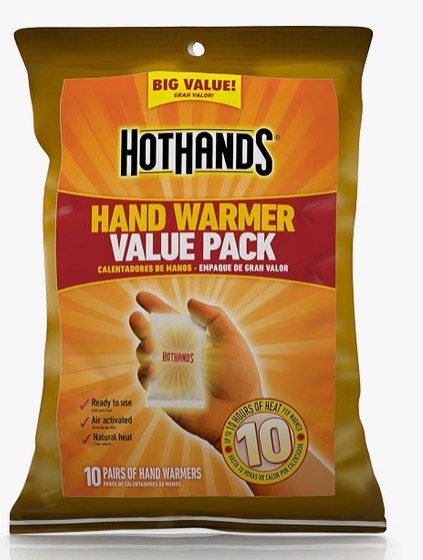
The heat outlasts the walk — by hours. Each pair is rated for up to 10 hours of heat once the air hits it. Crack a pair open before the first walk and the same pair is still working at the last one. That duration is the difference between a novelty and a system: one pair a day can cover the whole walking schedule.
Warm hands are working hands. The point isn’t luxury. Numb fingers fumble the leash clip, tear the bag, and drop the treats. With a warmer riding in each pocket, your hands stay in the game through the whole loop — it’s the same reason my cold-weather golf gloves earned their own note on this site. Heat plus dexterity is what a winter walk actually demands.
The market has clearly voted. 4.7 stars across roughly 19,900 ratings on the 10-pair pack, with 1,000+ bought in the past month alone. The 40-pair box carries Amazon’s Choice in the category, with 51,000+ ratings. This is the category standard, not an experiment.
The 10-pair pack works out to about $1.31 a pair. The 40-pair box — a limited-time deal at CA$39.25 against an $80.54 list when I checked — drops that to about $0.98 a pair, roughly 25% less. At a pair a day through the cold months, the bulk box is the buy; the 10-pack is how you find out.
What it doesn’t do
They are single-use. Every pair is a one-day product, and at a pair a day the wrappers add up over a winter — in cost, though the bulk math holds that near a dollar a day, and in garbage, which is the honest downside of the whole disposable format. If the waste bothers you more than the convenience delights you, rechargeable warmers exist; they trade this problem for a charging habit.
There’s no off switch. Once a pair is open, it runs its course — most of a day — whether you needed two hours of it or ten. On a mild morning that’s a pair spent on one short walk. Judge the day before you crack the seal.
They’re a heat source, not a glove. A warmer in a pocket or mitt adds heat; it doesn’t replace the layer that keeps wind off your skin while your hands are out working. In deep cold the system is both: real gloves for the working hand, warmers as the booster between jobs. Neither half does the other’s work.
The heat builds gradually. Air-activated means exactly that — they warm up over the first minutes after opening, not instantly. Crack the pair open while you’re putting your boots on, not at the trailhead with numb fingers.
How it compares
vs. rechargeable electric warmers: the rechargeable wins on waste and, over several winters of daily use, possibly on cost. It loses the only contest that matters at 6 a.m.: being ready. It has to be charged, remembered, and carried back inside every night. The disposable lives in the pouch, forgotten, until the morning it’s everything. Different tools for different levels of winter commitment.
vs. gloves alone: insulation slows heat loss; it doesn’t add heat. On the truly cold mornings, gloves alone are a slower route to numb. The warmers are the additive half of the system — which is why they ride in the same kit as my WinterSof gloves rather than instead of them.
10 pairs vs. 40 pairs: same warmers, two commitments. The 10-pair pack (CA$13.07) is the try-it size — and the right stocking stuffer. The 40-pair box (CA$39.25 on deal) is the daily walker’s season supply at about a quarter less per pair. I feature the 10 because it’s the honest starting point; my own usage tier is the box.
Verdict
Buy it if: your hands work outside daily in winter — walking a dog, above all — and you want heat that’s already in your kit when the cold morning comes, at about a dollar a day. Start with the 10-pair pack; graduate to the box if it becomes a habit, and it will.
Skip it if: disposable anything is a hard no for you — go rechargeable and keep the charging habit — or your cold exposure is a few outings a year, where gloves alone probably already do your job.
It isn’t a complicated product. It’s a flat little pouch of chemistry that turns a numb-fingered walk into a normal one, priced so that keeping a pair in every kit — pouch, car, coat — is just part of the running cost of winter with a dog.
Prices shown are the Amazon.ca prices at review time and may change; the 40-pair price is a limited-time deal and will move first.
Related reviews: YETI Sidekick Dry Gear Case — the walk pouch a pair rides in · FootJoy WinterSof Golf Gloves — the other half of the warm-hands system.
Tested: Both — in the city and up north.
My rating: 8/10 — docked for the single-use waste, and because a warmer is a booster, not cold protection on its own. As cheap, always-ready heat for hands that have a job to do, it’s the best value in the winter kit.