
An expert evaluation — and why that fits this product
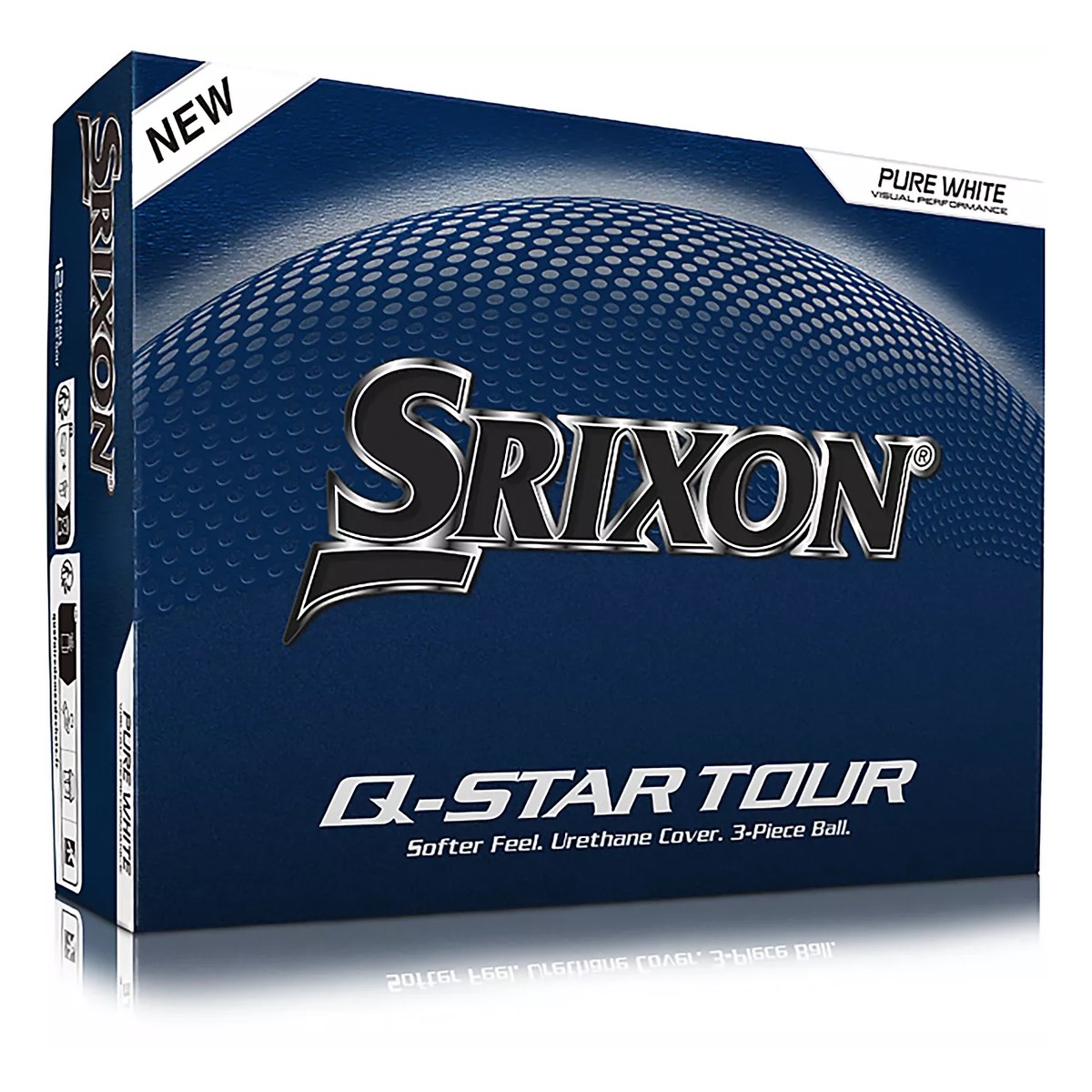
A golf ball is a spec sheet you hit. Compression, cover material, layer count, dimple pattern — the whole performance argument is in the construction, and construction is a procurement read before it is a feel read. This review is an expert evaluation, not a play test: it is built on the published construction, the manufacturer's specs, and independent 2026 test coverage, read through the eyes of a former professional golfer and teaching professional. The Q-Star Tour asks the sharpest question in the ball market: how much of the Pro V1's CA$77.99 is the urethane cover doing the work, and how much is everything else? For 2026, Srixon rebuilt its answer.
Who this is for
Golfers with moderate swing speeds — driver speed under roughly 100 mph, which is most of us — who want a urethane cover's greenside behaviour without paying the tour-ball tariff. If you currently play a two-piece ionomer ball for the price and wonder what you are missing around the greens, this is the rung you are missing it on. If you swing it fast enough to fully compress a tour ball, or you already play a Pro V1 and hold a low handicap, stay where you are — this ball is not built for you and is not pretending to be.
What it does well
Urethane at the mid price is the whole proposition. The 2026 Q-Star Tour wears a thin urethane cover — partly plant-derived biomass urethane, a first for the line — over a 3-piece construction. Urethane grips grooves and checks on a pitch; ionomer slides. At Golf Town this ball is CA$49.99 against the Pro V1's CA$77.99 (both checked on golftown.com), which makes it the cheapest way into a real urethane cover from a major maker — about CA$4.17 a ball versus CA$6.50, a gap that compounds across a season of lost balls.
The FastLayer core is graduated on purpose. Soft at the centre, firmer toward the edge: full swings compress the firm shell for ball speed, partial swings engage the soft middle for feel. Test coverage quotes about 74 compression — a tester figure, since Srixon does not publish one — against tour balls that live far higher. For a moderate swing, a tour ball's compression is a lock you can't pick; 74 is a door that opens.
Spin Skin+ is borrowed flagship tech. The coating comes down from the Z-Star line: an elastic layer designed to bite into wedge and iron grooves and generate the friction behind greenside spin. And straight is a feature: the 2026 test consensus is unusually consistent that accuracy is the standout — low, consistent spin with the long clubs, helped by the 338 Speed Dimple pattern, produces a straight, stable flight that testers call sneaky long for a soft ball. Feel, finally, is genuinely soft throughout the bag, especially off the putter.
What it doesn't do
Stopping power is the honest trade. The 2026 test data puts the Q-Star Tour strong on accuracy and mid-pack on distance — and toward the bottom on stopping power. It will not check and sit the way a Pro V1 does on a firm green; expect more release. It is not very workable, either: the low-spin stability that keeps it straight also keeps it straight when you ask for a draw. And fast swingers will overpower it — above its speed range the soft core gives up ball speed. This is a ranged product: inside its range it is excellent; outside it, the Z-Star and Pro V1 exist for a reason.
What it does well
- Real urethane cover at CA$49.99 — CA$28 a dozen under the Pro V1.
- Graduated FastLayer core tuned to moderate swing speeds.
- Accuracy first — the 2026 test consensus calls it notably straight.
- Soft feel through the bag, especially off the putter.
What it doesn't do
- Tour-level stopping power — expect release on approaches.
- Workability — it resists being shaped.
- Reward fast swings — over about 100 mph, move up the ladder.
How it compares
vs. Titleist Pro V1 (CA$77.99): the benchmark — better stopping power, better workability, firmer feel, and CA$28 a dozen more. The Q-Star Tour matches it on cover material and concedes the short-game grab. Golfers with moderate speeds get more of the Q-Star's potential than the Pro V1's; that is the whole argument in one sentence.
vs. Srixon Z-Star: the flagship gives the full tour package — firmer, faster-swing oriented, more spin — at flagship money. The Q-Star Tour is deliberately the softer, straighter, cheaper expression of the same technology tree. Pick your rung by swing speed, not by ego.
Verdict
Buy it if: your driver speed lives under about 100 mph, you want urethane-cover greenside control, you lose enough balls that CA$28 a dozen matters, and your miss is a curve you would rather not have. The honest arithmetic: losing two balls a round over forty rounds costs roughly CA$520 in Pro V1s and CA$333 in Q-Star Tours at Golf Town prices.
Skip it if: you rely on tour-level check on firm greens, you shape the ball deliberately, or your swing speed genuinely earns a tour ball's compression.
Price shown is the Golf Town price, checked on golftown.com in November 2026, and may change. This is an expert evaluation based on published specs and independent test coverage — not a play test.
Related reviews: Titleist Pro V1 — the benchmark it undercuts · Callaway Supersoft — the softer value alternative.
My rating: 8.5/10 — docked for stopping power and workability, which are real concessions, stated plainly. Inside its design brief — a brief that covers most golfers — this is the best-value urethane ball I have evaluated.
CA$49.99 at Golf Town
Direct retailer links. Prices were the checked prices at review time; the retailer page always shows today's.